
Forklifts are essential in warehouses, construction sites, and industrial settings across the UK — but they also pose serious risks when used incorrectly. At All Makes Mechanical, we know that prioritising safety isn’t just best practice — it’s vital to protecting your team, your equipment, and your business.
1. Always carry out a pre-use check
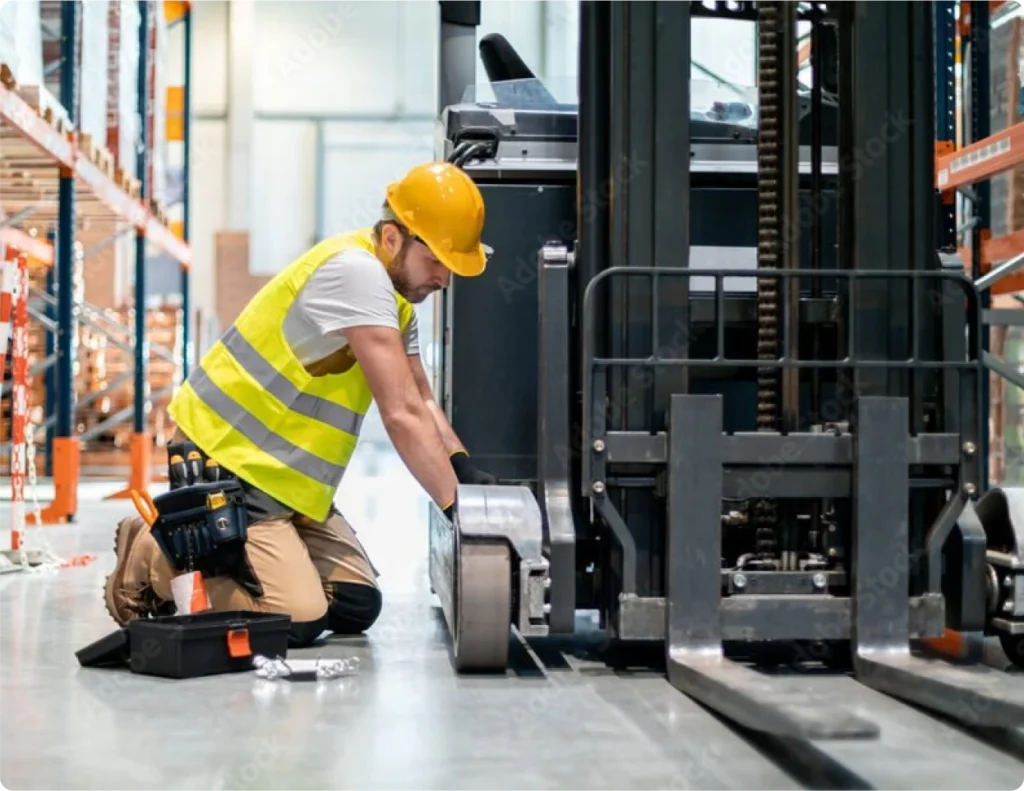
A daily forklift safety check is more than a box-ticking exercise — it’s your first line of defence against accidents. This should include:
• Visual checks of tyres, forks, and hydraulic hoses
• Checking for leaks or signs of damage
• Ensuring lights, horn, and brakes work properly
• Confirming seatbelts and restraints are in good condition
2. Know your load limits
Overloading a forklift can lead to tipping, loss of load, and damage to racking — all of which can be costly or dangerous. Always:
• Check the load capacity plate
• Distribute weight evenly
• Keep loads stable and secure before moving
• Never rely on guesswork — even a small miscalculation can have serious consequences.
3. Drive for the conditions
Indoor and outdoor environments each present unique hazards. Be aware of:
• Uneven surfaces or slippery areas
• Pedestrian traffic in shared spaces
• Poor visibility in loading bays or warehouses
Adjust your speed accordingly and always look in the direction of travel, especially in reverse.
4. Always use seatbelts
It might seem obvious, but seatbelts are often neglected — especially for short trips or on older machines. In a tip-over, they can be life-saving.
If your forklift doesn’t have a seatbelt, it may not meet UK safety regulations. Speak to your service provider about retrofitting safety restraints.
5. Respect forklift exclusion zones
Separating pedestrians and forklift traffic is a key part of site safety, but painted lines alone aren’t enough.
Physical barriers, signage, and clear walkways should all be used to create and maintain exclusion zones.
6. Never operate without proper training
In the UK, it’s a legal requirement for all forklift operators to have appropriate training from a recognised provider. Regular refresher courses are also essential, not just to stay compliant, but to stay safe.
All Makes Mechanical can advise on training options to help keep your team up to date.

7. Park safely
At the end of a shift (or even just a break) parking your forklift correctly helps avoid accidents. Operators should:
• Lower the forks to the ground
• Apply the parking brake
• Turn off the engine
• Remove the key
Leaving a forklift unattended with the engine running is both unsafe and against site protocols.
Safety is a shared responsibility
At All Makes Mechanical, we work with companies across the UK to supply, service, and maintain all makes of forklift trucks, but safety is at the heart of everything we do.
If you’re unsure whether your fleet or training measures meet current safety expectations, we’re here to help. From LOLER inspections to servicing and support, our experienced team can provide expert guidance to keep your operations safe and compliant.
Looking for reliable forklift servicing or advice? Contact All Makes Mechanical today.